The Diagnosis Phase (HIE)
Labor lasted three days, with constant decelerations that never fully resolved.
By Monday morning, just before shift change, everything escalated and we were rushed into an emergency C-section.
Due to complications, I was put under anesthesia. I woke up with no baby.
My husband was not told where she was. We were moved into another room, still with no answers. Still no baby.
We eventually received a call from the NICU. They told us our daughter had experienced Hypoxic Ischemic Encephalopathy due to a lack of oxygen. Her APGAR scores were 1, 1, and 3. She was diagnosed with severe HIE.
Hypoxic ischemic encephalopathy (HIE) is a type of brain injury that occurs when the brain does not receive enough oxygen and blood flow around the time of birth. In more severe cases, it can impact long-term movement, feeding, and neurological development.
She was immediately placed on therapeutic cooling. This is a treatment used in the first hours after injury to help reduce further brain damage and improve outcomes.
All of this was communicated over the phone.
We were told to prepare ourselves—that babies in this condition often do not make it past 72 hours.
I had not even met her yet.
At the same time, I was dealing with complications from severe preeclampsia that progressed into eclampsia. Physically, I was recovering. Mentally, I was somewhere between rage and complete emptiness.
COVID protocols limited access to the NICU. I understand now the intention was to protect critically ill infants, but it did not make the separation any easier.
The first neurologist we encountered stands out clearly. She was kind, patient, and intentional in how she communicated. My husband took notes during every call, trying to hold onto anything we could understand.
It was two and a half weeks before I was discharged and able to be present with Ophelia.
By then, survival was still the focus. Everything else came later.
The Emerging Phase (Early Signs)
As she stabilized, the focus shifted—but not into clarity.
There were signs, but nothing was clearly defined.
She had mixed tone and no sucking reflex. We started working with PT and SLP early. In order to be discharged, she needed feeding support. We pushed to go home with an NG tube, but it was against NICU policy.
The choice became clear: continue fighting for NG, or move forward with a G-tube and go home.
We chose to go home.
A G-tube (gastrostomy tube) provides nutrition directly into the stomach when a child is unable to safely feed by mouth, often due to coordination or neurological challenges.
She developed oral dysphagia, which took about two and a half years to overcome.
Once discharged, therapy became our full-time structure. PT, OT, and SLP multiple times a week—often five days a week. Appointment after appointment, specialist after specialist.
From discharge to around age two, our lives were built around therapy.
At that point, there still wasn’t a single, clear diagnosis guiding everything. Just pieces.
The Diagnosis Evolution
Those pieces started to come together over time.
Our therapists would reference Cerebral Palsy, but indirectly. It was suggested, hinted at, but never clearly stated.
Finally, around age one, I asked directly:
Are you saying she has cerebral palsy?
The answer was yes.
Cerebral palsy is a neurological condition caused by early brain injury that affects movement, muscle tone, and coordination.
That moment was not devastating in the way people might expect. It was clarifying. For the first time, we had something concrete to understand and work with.
She was diagnosed with spastic quadriplegic cerebral palsy, impacting all four limbs.
We dove into learning everything we could.
At some point around age two to two and a half, I burned out. The therapy schedule that once felt necessary became overwhelming. We stepped back from private therapy and transitioned to in-home services for a period of time, eventually returning to private therapy more selectively.
I had believed that if I just did enough—enough therapy, enough appointments, enough effort—she would “catch up.”
Then seizures started.
Initially, they were labeled as febrile seizures. I disagreed, but we monitored.
About six months later, she had a seizure that lasted 25 minutes.
At that point, she was diagnosed with Epilepsy.
Epilepsy is a condition characterized by recurrent, unprovoked seizures, often linked to underlying brain injury.
Now there was another layer. Another level of vigilance. Another plan to follow.
She has a seizure action plan in place. She is nonverbal but communicates through signs and attempts at speech. We are actively working to build her language—word by word, phrase by phrase.
Closing
There is no textbook that teaches you how to move through these moments.
Diagnoses like this do not arrive all at once. They develop over time, becoming clearer as a child grows, as patterns emerge, and as questions are finally asked directly.
You do not move through it with certainty.
You move through it by continuing to show up, learning as you go, and building understanding piece by piece.
Sources & Clinical References
- Centers for Disease Control and Prevention — Cerebral Palsy Overview
- National Institute of Neurological Disorders and Stroke — Hypoxic Ischemic Encephalopathy
- Epilepsy Foundation — Epilepsy Basics
About the Author
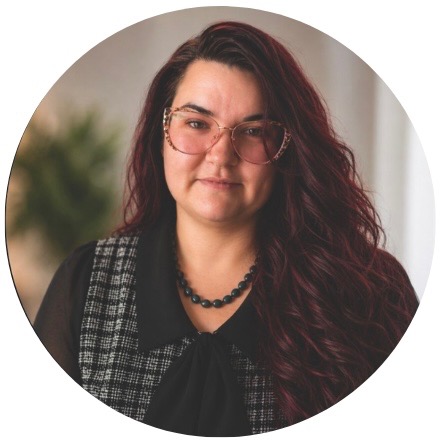
Gabrielle Ward-Collier is a nursing student at the University of Michigan–Flint and founder of The Neuro Care Bridge. She writes from both lived experience and growing clinical perspective, focused on the space between diagnosis and daily life for families navigating complex neurological conditions.


Leave a Reply